The Ultimate Guide to E-Trikes for Heavy Riders: Balancing Power, Payload, and Performance

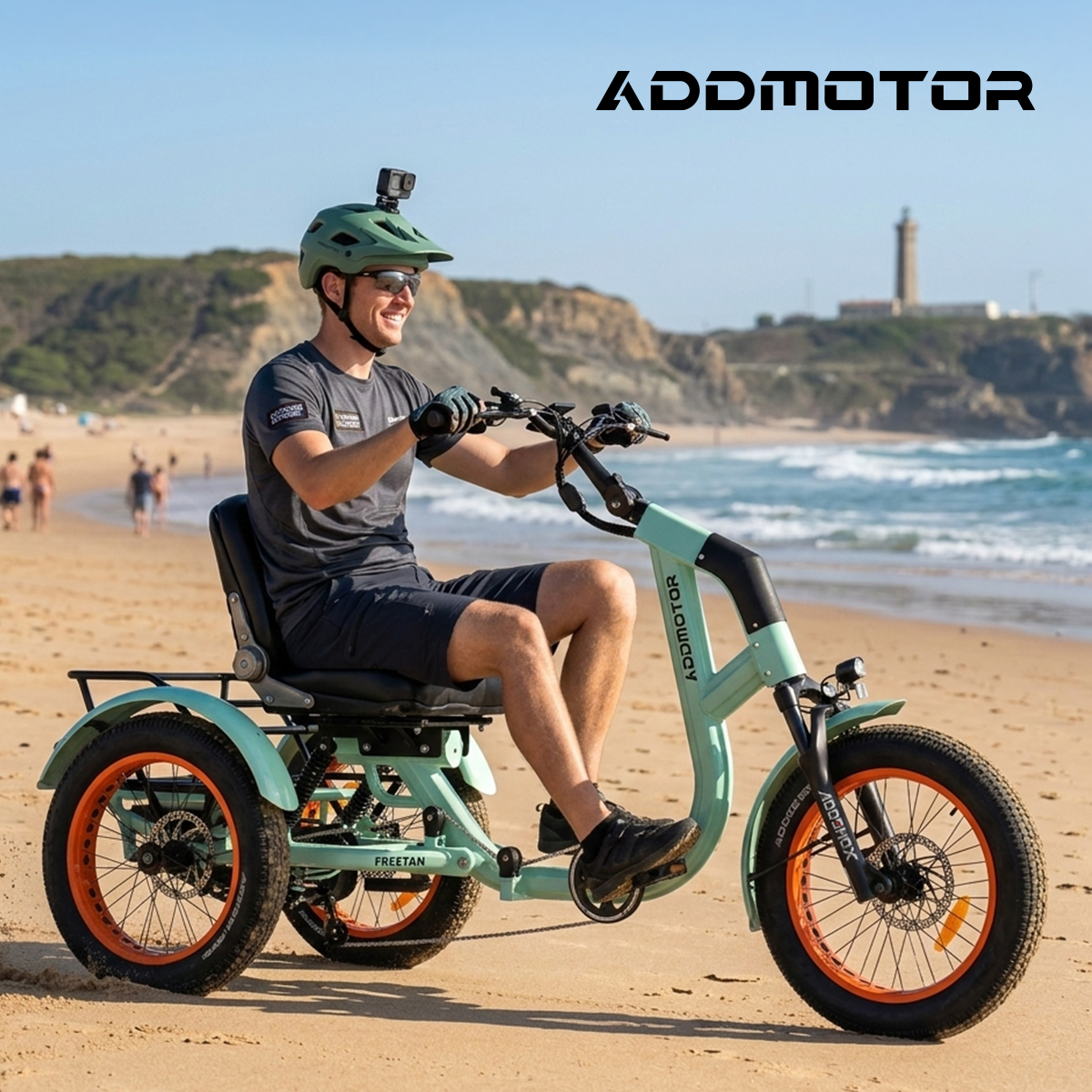
With three wheels for inherent stability and a frame designed for utility, the E-Trike is the gold standard for inclusive mobility. However, choosing the right E-Trike isn't just about picking a color. For a heavy rider, the physics of cycling change. When you combine a high body weight with environmental factors like steep inclines and varying terrain, the demand on the motor, battery, and frame increases exponentially. This article provides a comprehensive deep dive into selecting the right motor size and configuration for "heavy-duty" riding.
Table of Contents
I. The Physics of Weight and Wattage

In the world of electric motors, Watts (W) represent power, while Newton-Meters (Nm) represent torque. For a heavy rider, torque is arguably more important than top speed. Torque is the "grunt" that gets a 300-lb rider moving from a dead stop or pushes them up a 15% grade hill.
If a motor is undersized, it will struggle to reach its efficient RPM range. This leads to "stalling" or excessive heat buildup, which can melt internal gears or fry the controller. To avoid this, we must categorize motor needs based on specific weight brackets.
Weight Category Breakdown:
| Weight Category | Recommended Motor Power | Reasoning |
|---|---|---|
| 200 – 250 lbs (Standard) | 500W - 750W | 500W for flats; 750W for hilly areas to prevent stress. |
| 250 – 350 lbs (Heavy-Duty) | 750W (Baseline) | 500W feels sluggish and may fail prematurely. |
| 350 – 450+ lbs (Ultra-Payload) | 750W High-Torque / 1000W / Mid-Drive | Requires power management and high-torque reliability. |
II. Hill Climbing: The Ultimate Stress Test
For a heavy rider, a flat road is easy; a hill is a different story. When you ride uphill, the motor has to fight the force of gravity pulling the combined weight of the rider and the 80-lb trike downward.
The Role of Pedal Assist (PAS)
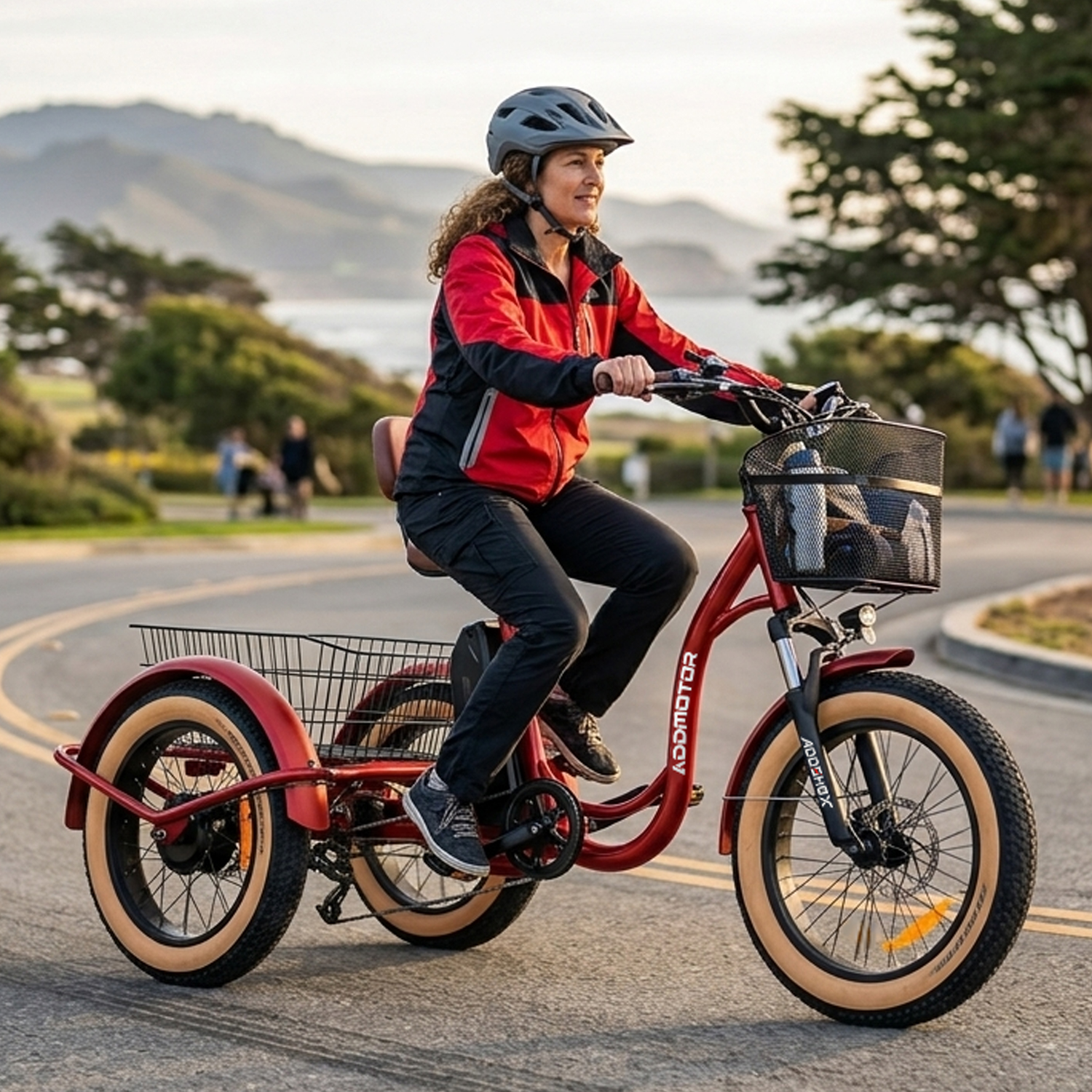
Most modern E-Trikes feature a Pedal Assist System. For heavy riders, the pedals are not just for exercise—they are a mechanical leverage tool.
- Cadence Sensors: These detect when the pedals are turning and provide a pre-set amount of boost.
- Torque Sensors: These measure how hard you are pushing and provide a proportional boost. For heavy riders, a torque sensor often feels more natural and provides immediate power.
Mid-Drive vs. Hub Motors for Climbing
Hub Motors: Located in the wheel. They are great for flat ground but have a fixed gear ratio. If the hill is too steep and the rider is heavy, a hub motor may "bog down."
Mid-Drive Motors: Located at the cranks (where the pedals are). These motors drive the chain. This allows the motor to utilize the trike's mechanical gears. By shifting into a low gear, a 750W mid-drive motor can climb almost any hill, even with a 400-lb payload.
III. Environmental Conditions and Surface Resistance
The motor’s "perceived load" changes based on where you ride. A 300-lb rider on a paved bike path requires significantly less power than the same rider on a gravel trail or through a grassy park.
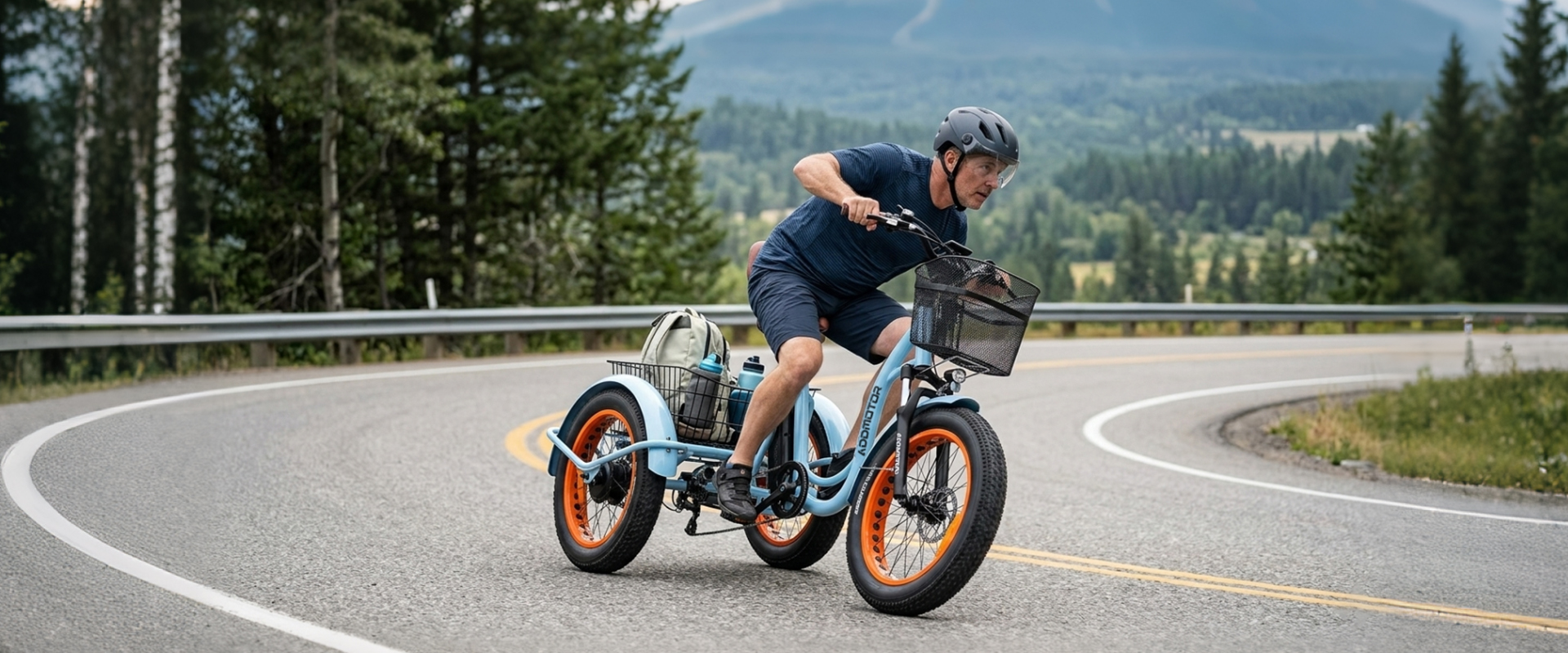
Soft Terrain: Grass, sand, and loose gravel increase "rolling resistance." For heavy riders, tires tend to sink deeper. To counteract this, Fat Tires (4 inches wide) are essential. They distribute weight over a larger surface area, preventing the trike from "digging in."
Wind Resistance: E-Trikes are not aerodynamic. A heavy rider provides a large "sail" area. In a strong headwind, a 500W motor might struggle, making a 750W or 1000W motor a much more comfortable choice.
IV. Beyond the Motor: The Supporting Cast
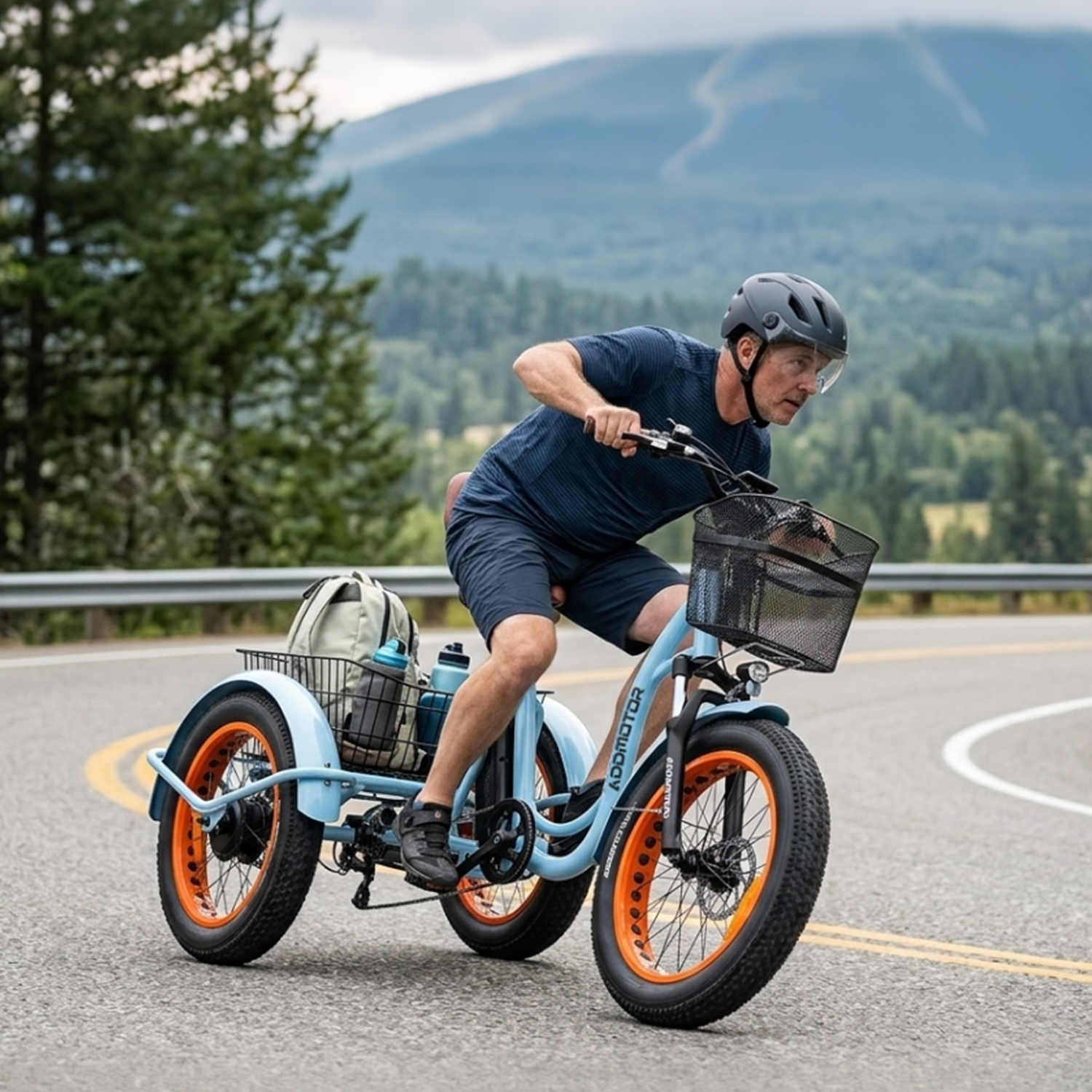
A powerful motor is useless if the rest of the trike can't handle the strain. For heavy people, three specific components must be over-engineered:
A. Braking Power (Hydraulic is a Must)
Stopping a 350-lb rider plus a 90-lb trike moving at 20 mph generates an immense amount of kinetic energy. Hydraulic Disc Brakes are non-negotiable for safety. They provide superior stopping power with much less hand effort.
B. Battery Voltage and Capacity
For heavy loads, a 48V or 52V system is superior to a 36V system. Higher voltage allows the motor to pull more power with less heat. Additionally, heavy riders should look for batteries with high Amp-hours (Ah)—at least 15Ah to 20Ah.
C. Structural Integrity and Suspension
Look for a frame made of 6061 Aluminum Alloy or reinforced steel with a stated Payload Capacity of 400+ lbs. Robust suspension protects the rider's spine and prevents the frame from developing stress cracks over time.
V. Practical Recommendations for Purchase
| Component | Minimum Requirement for Heavy Riders |
|---|---|
| Motor | Minimum 750W (geared hub) or 500W-750W (mid-drive) |
| Tires | 20" or 24" Fat Tires (4.0" width) |
| Brakes | Hydraulic disc brakes with 180mm rotors |
| Battery | 48V 15Ah (minimum), ideally 20Ah |
| Gearing | At least a 7-speed drivetrain |
VI. Conclusion
Being a heavy rider does not mean you have to be limited in your mobility. By choosing a trike with a 750W+ motor, utilizing the mechanical advantage of pedals, and ensuring your components—like hydraulic brakes and fat tires—are up to the task, you can enjoy a safe and powerful riding experience.
The goal isn't just to move; it's to move with confidence. Whether you are navigating a steep driveway or cruising through a local park, the right E-Trike configuration turns a potential struggle into a smooth, effortless adventure. Prioritize torque, demand high-quality braking, and never underestimate the power of a good pedal-assist system to conquer any hill in your path.